Energy
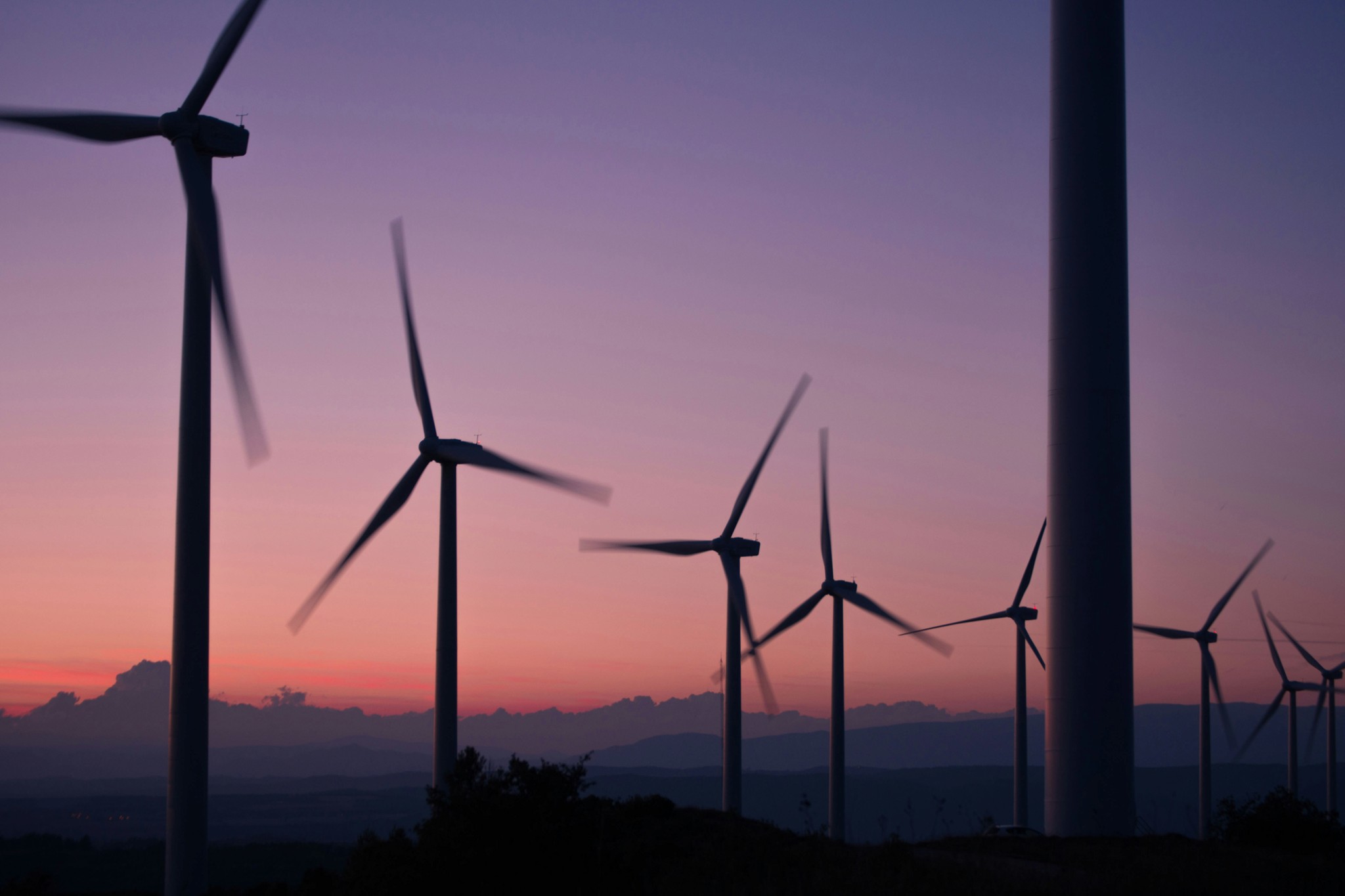
For more than a decade, the UK’s energy story has been one of rapid progress: soaring levels of wind capacity, declining fossil-fuel use, and a grid that is cleaner and more flexible than ever before. Yet, despite this progress, something paradoxical remains true: we frequently generate more clean power, especially wind, than we can use.
At night, when wind turbines often spin hardest, demand drops so low that clean electricity is curtailed, wasted or exported at low value. In other words, the UK already produces more renewable electricity than the grid can absorb at many moments. The bottleneck isn’t the turbines or the cables. The bottleneck is timing.
To reach something close to ‘perfect energy efficiency’ (using every clean electron we generate) we need demand to meet supply, not the other way around. And that is where AI becomes not just useful, but essential.
Have we spent years solving the engineering problem while overlooking the behavioural one? And if we try to use technology to quietly reshape human behaviour, will it work?
Traditional automation solutions and pre-programmed schedules have their limitations. They rely on predictable patterns and can't adapt to the complexities of human life. But AI is different. AI can be trained with data from the home such as presence information, energy usage patterns, even home health data, to predict and adapt to changing needs. Its ability to learn, predict and adapt makes AI uniquely suited to optimising energy usage in real-time.
However, at what point does optimisation become intrusion — and who decides where that line sits?
Time-of-use energy tariffs reward people for shifting some of their electricity use to off-peak periods. The logic is beautifully simple, when there’s high wind and low demand electricity gets cheaper. When people shift their usage, they save money. When demand rises during clean-power hours, far less renewable energy is wasted.
This shiftable consumption doesn’t ask people to change their lifestyles, only when they press start on things like dishwashers, washing machines, tumble dryers, water heating and EV charging. But here’s the challenge: most people won’t, and shouldn’t have to, think about this every day. Energy efficiency must be invisible to be widely adopted.
Consumers want their homes to “just work”. They don’t want to check the grid carbon intensity, read wind forecasts, calculate the optimal time to run an appliance, program schedules or remember to plug in at the “right” moment. As long as perfect efficiency requires active effort, it will never scale. The solution is not more education. The solution is AI-powered automation.
AI can automatically and instantaneously do what no household would ever want to do manually: adjust to real-time tariffs, optimise the use of multiple appliances, ensure comfort and convenience are maintained, and achieve real, substantial cost savings.
So, will people accept less control if the outcome is objectively better?
Imagine a home where EVs charge automatically when the price is lowest because the wind generation is highest. A home where pre-loaded washing machines start themselves during clean-power hours. Where immersion heaters only top up when electricity is cheapest and where smart plugs shift discretionary loads without human input. People would simply live their lives while AI would make them cheaper and greener.
The UK has millions of homes with several kilowatt-hours of flexible demand each night: EV charging, appliances, heating, cooling, water heating. If even a few million households shifted just one or two small loads into low-cost, high-wind periods, the collective effect would be enormous, easily absorbing much of the currently underused renewable energy.
When homes begin making decisions, do they become appliances or infrastructure? And could the most powerful power station in Britain simply be a collection of our houses?
Perfect utilisation doesn’t require perfect participation. It requires predictable, AI-orchestrated participation from enough homes to smooth the valleys of demand. This is not about every home doing everything. It’s about enough homes doing something, consistently and automatically, and AI makes that possible.
The real goal is a self-balancing, AI-enhanced grid. The future energy system is not one where people must think about energy. It’s a system where energy thinks for them. A grid in which homes automatically absorb spare wind generated power, AI coordinates demand without inconvenience and renewable generation becomes the foundation, not the supplement. Consumers save money while the grid stabilises itself.
In this world, ‘perfect energy efficiency’ no longer describes individual appliances, it describes the entire national system: a living network, learning, predicting and optimising every second.
Think this sounds fanciful? AI turns possibility into practice. The UK already has abundant renewable power. We already have flexible tariffs. We already have smart appliances and smart meters. What we have been missing is the intelligence that ties them together at scale.
So to make this ambition a reality, are we waiting for more technology or simply the willingness to connect what already exists?
AI is the catalyst that turns consumers into participants, homes into flexible assets and the grid into a perfectly optimised system. Not through dashboards or decisions, but through automation and invisible action.
The UK’s energy future needn’t just be green. It can be effortlessly green, powered by wind, guided by AI and delivered without a single extra thought from any of us.
So, ultimately will the most successful climate solutions be the ones people barely notice? And if sustainability requires no effort, does it finally become inevitable?